
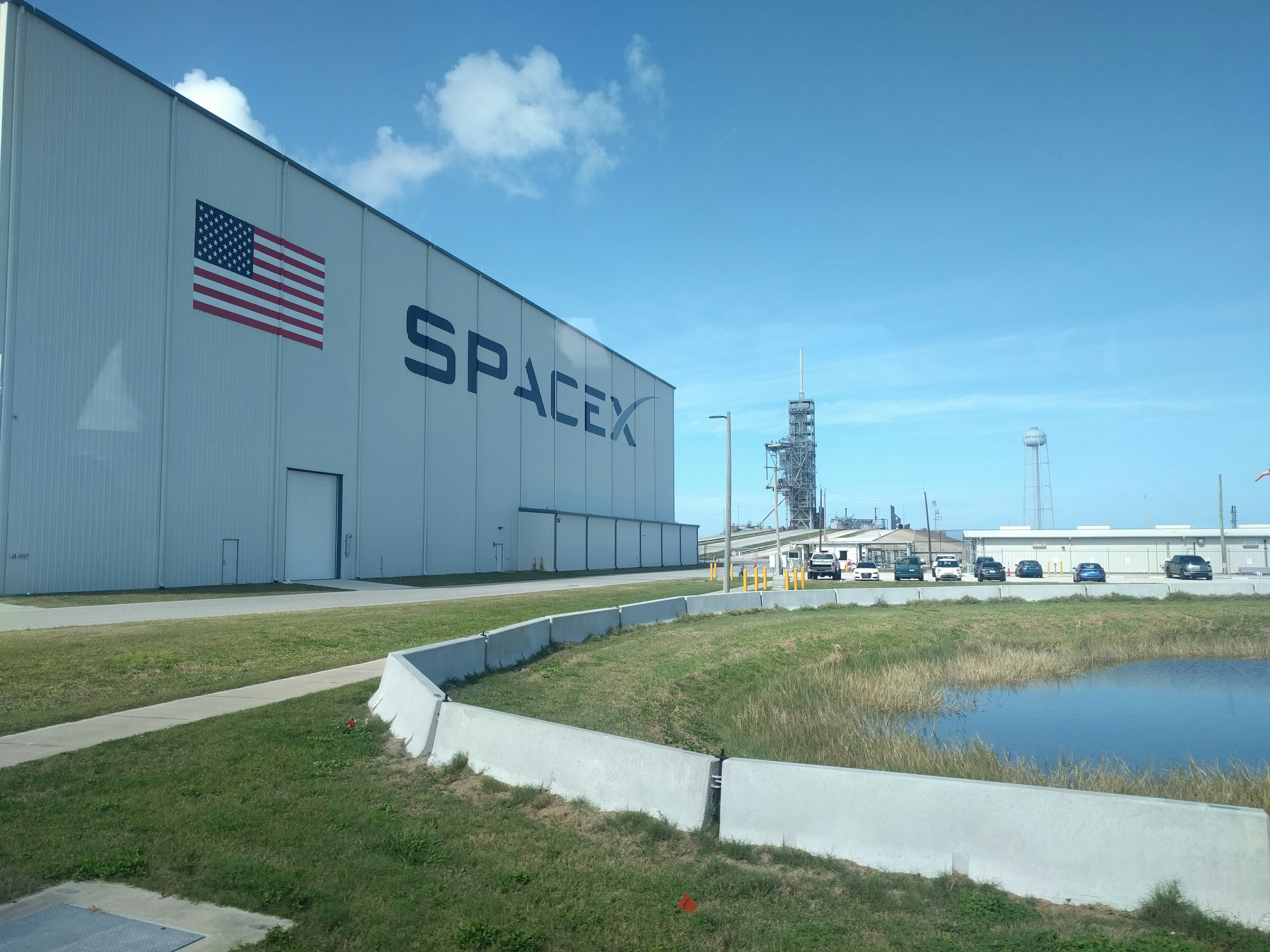
Space Exploration Technologies Corp., better known as SpaceX, is a privately held American aerospace company founded by Elon Musk in 2002. Its central ambition has been to make access to space less expensive and more routine, with the longer-term goal of enabling people to live beyond Earth. That vision has informed a development strategy focused on building launch vehicles, spacecraft, and operational systems within one organization. Based in the United States, SpaceX entered a field historically shaped by government agencies and established aerospace contractors, but sought to compete through faster development cycles and reusable hardware.
The company’s early years were marked by technical setbacks and financial pressure. Its first three Falcon 1 launches failed to reach orbit, raising questions about whether a new private provider could deliver reliably. A successful fourth flight in 2008 helped secure the company’s future, while a NASA contract to transport cargo to the International Space Station gave it a significant operational opportunity. SpaceX subsequently developed the Falcon 9 rocket and Dragon spacecraft, building a record in commercial satellite launches and cargo missions. The Falcon 9’s recoverable first stage became a defining feature, allowing boosters to be refurbished and flown again in many missions.
SpaceX expanded further into human spaceflight when NASA selected its Crew Dragon system to carry astronauts to the International Space Station. Crewed missions placed the company among a small group of providers capable of transporting people to orbit and strengthened its role in public-private space programs. Its growth has been shaped by competition with other launch firms, government partnerships, and rising demand for satellite deployment and commercial services. These forces have helped transform space activity from a predominantly state-led enterprise into a more varied industry. SpaceX’s influence therefore reflects not only its vehicles, but also a wider shift toward commercial participation in launch, orbital logistics, and future exploration.
Falcon 9 is SpaceX’s workhorse launch vehicle, carrying satellites, scientific payloads, and supplies into orbit while also serving as the company’s primary system for crewed missions. Its defining feature is a first-stage booster designed to return after separation rather than fall into the ocean as discarded hardware. This capability has made reusable rockets a prominent example of how space exploration technologies are changing launch operations in the USA and beyond.
Recovery depends on coordinated engineering and flight control. After the booster separates, engines reignite in carefully timed burns to adjust its speed and trajectory. Grid fins help steer the stage through the atmosphere, while landing legs deploy before touchdown. Depending on the mission profile, the booster lands vertically on a prepared ground pad or on an autonomous drone ship positioned at sea. Guidance systems must account for changing conditions and deliver the vehicle to a small landing zone with precision.
A recovered stage can be inspected, repaired where necessary, and prepared for another flight. Reuse may reduce the amount of new hardware needed for each launch and support a higher launch cadence, potentially improving the economics of access to orbit. These benefits are not automatic: boosters require detailed inspection, maintenance, refurbishment, and continued investment in facilities and engineering. The cost and time required between flights depend on the vehicle’s condition and mission demands.
For missions requiring greater lift capacity, SpaceX developed Falcon Heavy, which combines a central Falcon-derived core with two side boosters. The architecture builds on hardware and operational experience from Falcon 9 while enabling larger payloads or delivery to more demanding orbits. Together, the launch systems support commercial, scientific, and government missions. SpaceX also contributes to routine cargo and crew transport to the International Space Station, providing regular transportation services that help sustain research and operations in low Earth orbit. These capabilities make reusable launch systems an important part of contemporary spaceflight.
Starship is SpaceX’s fully reusable, super-heavy launch system under development, intended to transport people and cargo on missions from Earth orbit to the Moon and Mars. Its two-stage architecture pairs the Super Heavy booster with the Starship spacecraft, which is designed to operate in space and return for reuse. Both stages use methane and liquid oxygen as propellants. This combination is intended to support high performance and, in principle, allow methane production from local resources on Mars. Achieving reliable reuse at this scale remains a substantial engineering challenge, requiring advances in heat shielding, propulsion, landing, and vehicle turnaround.
Repeated integrated test flights are central to Starship’s development. These flights test the booster, spacecraft, launch infrastructure, and flight procedures as a connected system, while providing data that can inform design changes. Progress depends not only on reaching planned flight milestones but also on demonstrating safe, repeatable operations and meeting applicable licensing requirements. The vehicle’s eventual role in lunar missions will also depend on additional capabilities, including in-space refueling and coordination with other mission systems. Accordingly, test results and operational readiness matter as much as the scale of the proposed launch system.
Starlink is a separate, large satellite-communications constellation designed to provide broadband service, including in regions with limited terrestrial infrastructure. Its expanding network illustrates how launch capacity and satellite services can support related, but distinct, commercial and operational goals. Starship could potentially lower the cost of placing substantial payloads in orbit, while Starlink depends on a distributed fleet of satellites, ground equipment, and regulatory authorization. Together, the programs express broader ambitions for space access and connectivity, not a single integrated service. Their growth also raises concerns: launch activity and satellite brightness may affect communities and astronomical observations, while spectrum use, cross-border licensing, and competition require oversight. Operators must also manage collision risks and orbital debris through responsible deployment, tracking, and satellite disposal. Search terms such as “space exploration technologies corp.,mmangla.com,usa” may appear in online discussions, but they do not describe the technical relationship between these programs. Their long-term contribution will depend on demonstrated reliability, responsible operations, and continued attention to public and environmental impacts.
For nearly a decade, NASA relied on Russian spacecraft to transport astronauts to the International Space Station after the retirement of the Space Shuttle. SpaceX’s Crew Dragon, developed through NASA’s Commercial Crew Program, restored the United States’ ability to launch people from domestic soil in 2020. The spacecraft carries crews to and from low Earth orbit, while its autonomous docking systems and reusable design demonstrate how commercial providers can contribute to government missions. SpaceX also flies cargo missions that deliver supplies, equipment, and scientific experiments to the station. Together, these services help sustain ongoing research and operations in orbit while giving NASA another transportation option.
Beyond the space station, SpaceX is pursuing missions that could extend human activity farther from Earth. The company has been selected to develop a crewed lunar lander for NASA’s Artemis program, and it presents Starship as a system intended eventually to support journeys to Mars. These plans remain dependent on extensive testing, successful orbital refueling, and reliable performance across repeated flights. Advances in U.S. space exploration technologies may influence how other companies and agencies design launch vehicles, spacecraft, and mission services. Yet ambitious timelines should be weighed against the complexity of developing systems capable of carrying people safely over long distances.
Human spaceflight demands rigorous attention to crew safety, including dependable life-support systems, emergency procedures, and protection during launch and reentry. Failures can have severe consequences, and testing cannot eliminate every risk. Mission costs, regulatory oversight, and environmental effects also matter: launches produce emissions and noise, while increasing flight rates may intensify impacts around launch sites. Reusable vehicles may reduce some costs, but their practical benefits depend on maintenance needs and demonstrated reliability. SpaceX’s progress could broaden access to space and encourage competition across the industry. Whether its lunar and Mars ambitions endure will depend not only on technical milestones, but also on transparent safety practices, responsible operations, and sustained success over time.