
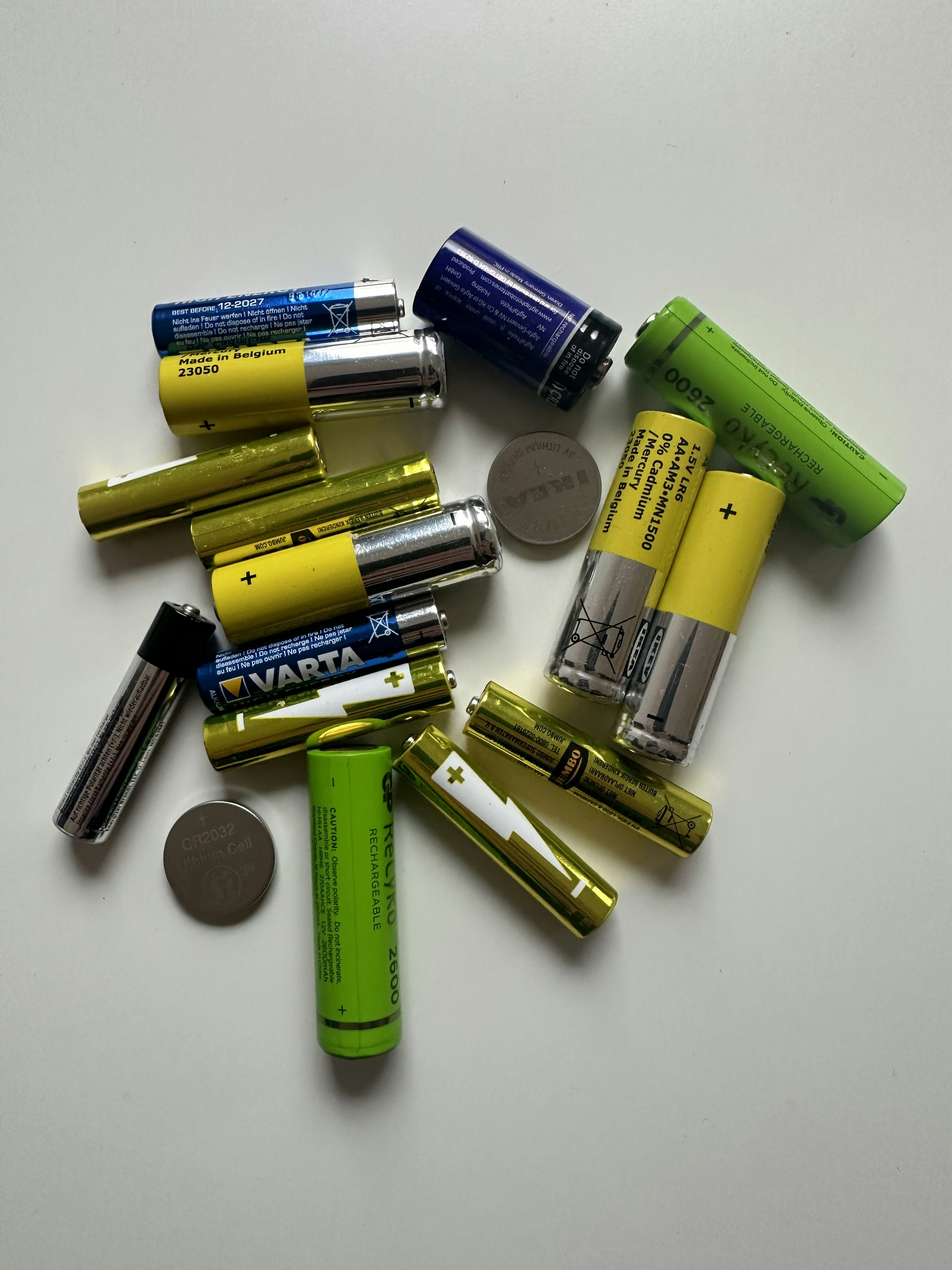
Types of Batteries
A battery stores energy in chemical form and delivers it as electricity. Inside, chemical reactions involving two electrodes and an electrolyte create conditions that allow electrons to move through an external circuit. The anode is the electrode where oxidation occurs during discharge, releasing electrons into that circuit. They travel through the connected device, doing useful work, before returning to the battery at the cathode, where reduction occurs. The electrolyte allows ions to move within the cell and helps balance charge, but it generally does not carry electrons through the external circuit. Rechargeable batteries use an external power source to reverse these reactions, restoring stored energy.
Several specifications help describe how a battery will perform. Voltage indicates the electrical potential available to push current through a circuit; devices are designed to operate within a particular voltage range. Capacity, commonly measured in amp-hours (Ah), indicates how much charge a battery can supply over time. Energy, measured in watt-hours (Wh), accounts for both capacity and voltage and is often more useful when comparing how long batteries may run a device. Power output describes how quickly energy can be delivered, which matters for equipment with high or changing demands. Actual performance can vary with temperature, age, discharge rate, and operating conditions.
Cycle life is the number of charge-and-discharge cycles a rechargeable battery can complete before its capacity falls to a specified level. Shelf life describes how long a battery can be stored while remaining usable, while self-discharge refers to the gradual loss of charge when it is disconnected from a device. These measures are not interchangeable: storage temperature and battery condition, for example, can affect both. Among the types of batteries available, chemistry, physical size, and internal design shape voltage, capacity, power, lifespan, safety requirements, and cost. Those differences determine whether a battery is suitable for a small household device, a vehicle, or energy storage. Comparing specifications alongside intended use provides practical information for selecting a battery that fits performance needs and handling requirements.
Primary batteries are designed to deliver power through one discharge cycle and are not intended for routine recharging. They are useful when equipment may sit unused for months or years, when replacing a cell should be straightforward, or when reliable power matters more than reusing the battery. Their chemistry and sealed construction can support long shelf life, although actual storage life depends on the product, temperature, and storage conditions. For emergency supplies, remote controls, and infrequently used instruments, these single-use cells can be a practical choice among the many types of batteries available.
Zinc-carbon and alkaline cells are familiar options for everyday, low- to moderate-drain devices, including clocks, toys, and basic flashlights. Zinc-carbon batteries are often inexpensive, but generally provide less capacity and perform less effectively under heavier loads than alkaline alternatives. Alkaline cells are widely available in formats such as AA, AAA, C, D, and 9-volt, and usually last longer in comparable devices. Both chemistries can be less suitable for high-drain equipment, where output may fall quickly or a rechargeable option may be more economical over time.
Lithium primary batteries can offer long service life, low self-discharge, and dependable operation across a broad temperature range, making them useful in cameras, sensors, outdoor equipment, and cold-weather applications. They are sold in several shapes, including coin cells and cylindrical formats, so users should match the exact type specified for their device. Silver-oxide and zinc-air cells serve compact electronics. Silver-oxide button cells provide relatively steady voltage in watches and small instruments; zinc-air cells, commonly used in hearing aids, are lightweight and draw oxygen through openings in the cell. Zinc-air models may have a limited life after their seals are removed. Each chemistry has trade-offs in cost, capacity, storage, and handling. Never recharge a battery unless its manufacturer explicitly identifies it as rechargeable; attempting to recharge a primary cell can cause leakage, overheating, or rupture. Check device instructions and local disposal guidance before replacing or discarding used cells.
Secondary batteries can be recharged because their electrochemical reactions can be reversed by applying an external current. The main types of batteries differ in energy storage, weight, price, maintenance, lifespan, and charging needs, so the appropriate choice depends on the device and operating conditions rather than a single chemistry being universally best.
Lead-acid batteries are relatively inexpensive, dependable, and widely used for vehicle starting and backup power, but they are heavy and have lower energy density than newer alternatives. Flooded models require ventilation and periodic checks or topping up; sealed AGM and gel versions need less routine maintenance. Their cycle life varies with design and depth of discharge. Charging must follow the specified voltage limits, since overcharging can cause damage or, in flooded units, gas release. Recycling is well established, but lead and acid require careful handling.
Nickel-cadmium batteries tolerate demanding use, temperature extremes, and many charge cycles, making them durable in specialized equipment. They have moderate energy density and can be heavier than lithium-based cells. They are generally more costly than lead-acid options and require suitable charging; prolonged partial cycling may reduce usable capacity in some applications. Cadmium is toxic, so these batteries require controlled collection and recycling rather than disposal with household waste.
Nickel-metal hydride batteries offer greater energy density than nickel-cadmium and are common in household rechargeable cells and some hybrid vehicles. They are moderately priced and comparatively robust, though self-discharge and heat during charging can be concerns. Lithium-ion families provide higher energy density and lower weight, supporting portable electronics and electric vehicles. Lithium-polymer designs are a lithium-ion format that can support slim or custom shapes, not a wholly separate chemistry. These cells typically need a battery-management system, controlled charging, and protection from damage or excessive heat; misuse can cause fire. Costs, cycle life, and maintenance vary by cell design. End-of-life recycling is important, and consumers should use approved collection programs. Comparing these types of batteries against energy, service life, safety, and total cost helps match a rechargeable battery to its intended use.
Choosing among the types of batteries starts with the device, not the label. Check its manual for the required physical size, nominal voltage, chemistry, and approved battery models. Voltage must match the device’s specification; a higher value is not a safe way to improve performance. Capacity, commonly expressed in amp-hours or milliamp-hours, indicates stored charge and often affects runtime, but it does not describe voltage or guarantee a particular operating time. Actual runtime also depends on power demand, settings, and battery condition.
Next, consider how the device will be used. High-drain equipment may need batteries designed to supply power quickly, while low-demand devices can prioritize long shelf life. Frequent use may make a rechargeable option more practical, although its upfront cost, charger, and replacement schedule affect lifetime value. For portable equipment, compare weight and size. Check the specified operating temperature as well: extreme cold can reduce available power, and heat can shorten battery life or create safety concerns. Manufacturer recommendations should guide the final choice.
Use only a battery chemistry and charger approved for the device. Chemistries differ in voltage, charging requirements, and behavior under stress; a charger intended for one type may overcharge or damage another. Incorrect combinations can cause poor performance, leakage, overheating, or fire. Follow charging instructions, avoid excessive heat, and protect batteries from crushing, punctures, moisture, and short circuits. Do not carry loose batteries where metal objects could bridge their terminals. Store them as directed, away from heat and children, and inspect them regularly. Stop using a battery that is swollen, leaking, damaged, or unusually hot.
When a battery reaches the end of its useful life, dispose of it responsibly. Local rules vary, so check municipal guidance or a retailer’s collection program rather than assuming household trash is acceptable. Rechargeable, lithium, and lead-acid batteries should generally go to suitable collection or recycling programs, where they can be handled safely and useful materials recovered. Before drop-off, follow the program’s instructions; some require terminals to be covered or batteries separated. Never burn batteries, and do not place damaged batteries in ordinary recycling bins. Careful selection, handling, and disposal support reliable device operation and reduce avoidable environmental and safety risks.