
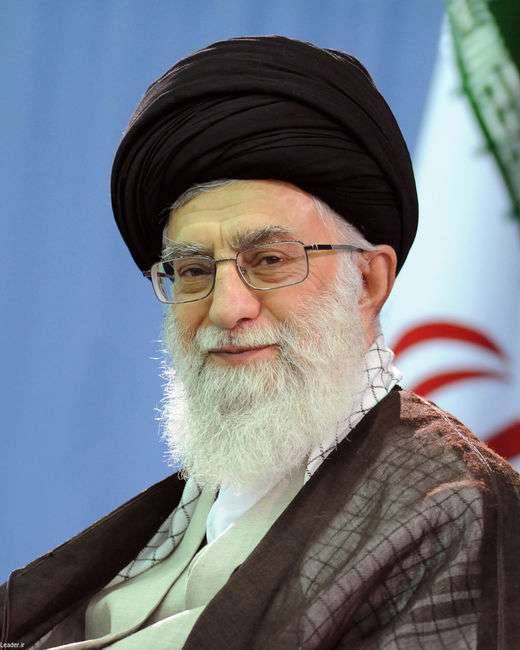
Introduction to Ayatullah al Khomeini
Ayatullah al Khomeini, born on September 24, 1902, in the town of Khomein, Iran, was an influential figure who played a crucial role in reshaping Iranian society and politics during the 20th century. His early life was marked by a strong commitment to Islamic scholarship, as he pursued religious studies in various theological centers, including the prestigious seminary in Qom. Khomeini’s scholarly prowess quickly earned him recognition as a prominent cleric, which laid the groundwork for his later endeavors as a political leader.
As a descendant of a distinguished clerical family, Ayatullah al Khomeini’s upbringing instilled in him a deep sense of religious duty and social justice. He became increasingly concerned about the socio-political conditions in Iran, particularly during the Pahlavi dynasty, characterized by autocratic rule and Westernization. His critique of the Shah’s regime and its policies garnered substantial support among various segments of Iranian society, from intellectuals to the working class. Khomeini’s writings and speeches captivated the populace, advocating for the establishment of an Islamic government based on the principles of justice and equality.
His 1963 protests against the Shah’s oppressive policies ultimately led to his exile; however, this period away from Iran only amplified his influence. Throughout his exile, Khomeini maintained communication with his supporters, using religious instruction to rally them against the regime. Upon his return to Iran in February 1979, he was greeted as a national hero, symbolizing a new era of freedom and religious governance. The drive he inspired led to the establishment of the Islamic Republic of Iran, marking a pivotal moment in both Iranian history and the Islamic world. Ayatullah al Khomeini’s legacy continues to resonate, as he remains a defining figure in contemporary Islamic thought.
Early Life and Education
Ayatullah al Khomeini was born on September 24, 1902, in the small town of Khomein, situated in the Markazi Province of Iran. He was born into a family with a rich religious background, which played a significant role in shaping his foundational beliefs. His father, a cleric, imparted Islamic values and teachings effectively, fostering an atmosphere conducive for academic and spiritual growth. This early exposure to Islamic traditions laid the groundwork for his illustrious future as a prominent religious leader.
During his formative years, Khomeini displayed an exceptional aptitude for learning, which led him to pursue his education in Islamic jurisprudence and philosophy. At the age of 16, Ayatullah al Khomeini moved to the city of Qom, widely recognized as a key center for Islamic studies in Iran. Here, he encountered various scholars and influential figures, which significantly impacted his intellectual development. Among these mentors was Ayatollah Abdul Hossein Burujerdi, who profoundly influenced Khomeini’s understanding of Islamic teachings and political thought.
As he immersed himself in the rigorous study of fiqh (Islamic jurisprudence), ethics, and theology, Khomeini cultivated a critical mind that would later challenge the socio-political dynamics of Iran. He also studied works from celebrated Islamic philosophers, such as Mulla Sadra, which augmented his philosophical perspectives and allowed him to develop a unique blend of traditional Islamic thought with contemporary issues. His ability to bridge classical Islamic concepts with modern-day societal concerns resonated throughout his lifelong endeavors. His education was not merely an academic pursuit but also served as a catalyst for the values and strategies he would employ later as a revolutionary leader.
In conclusion, the early life and educational experiences of Ayatullah al Khomeini were marked by a rich blend of familial influence, rigorous academic exposure, and mentorship that played a pivotal role in shaping his outlook and laying the foundation for his leadership in Iran.
Rise to Prominence
Ayatullah al Khomeini’s rise to prominence as a key figure in Iran’s religious and political landscape can be traced through significant milestones in his life. Born in 1902 in Khomein, Iran, he began his religious studies at a young age, eventually moving to the holy city of Qom, where he furthered his education under esteemed scholars. His deep knowledge of Islamic jurisprudence not only garnered him respect among peers but laid the foundational work for his future influence as a religious leader.
During the 1960s, amidst political upheaval and the growing discontent towards the Shah’s regime, Khomeini emerged as a vocal critic of the government. His opposition stemmed not only from political grievances but also from a fundamental clash between modernity and religious values. In 1963, he delivered a series of lectures that vehemently critiqued the Shah’s policies and highlighted the need for a return to Islamic governance, which resonated deeply with the Iranian populace. These public addresses marked a turning point, solidifying his position as a leading cleric.
Ayatullah al Khomeini’s writings during this period—particularly his work “Islamic Government: Governance of the Jurist”—provided a comprehensive vision of an Islamic state and expounded on the concept of Vilayat-e Faqih (Guardianship of the Jurist). This concept not only justified his political engagement but also served as the ideological basis for countering secular governance. His intellectual contributions and unwavering stance against tyranny mobilized a mass movement that would ultimately lead to the Iranian Revolution in 1979, thereby transforming Iran into an Islamic Republic.
Exile and the Formation of Opposition
In 1964, Ayatullah al Khomeini faced political repression in Iran as his vocal dissent against the ruling monarchy intensified. His opposition was primarily rooted in the perception of the Shah’s regime as corrupt and heavily influenced by foreign powers, particularly the United States. This culminated in Khomeini’s exile to Turkey, and subsequently to France, effectively severing his direct involvement in Iran’s political landscape.
Despite being physically distant from the country, Khomeini’s influence only grew during his years abroad. In exile, he became a central figure for those who were disillusioned with the Shah’s government. Utilizing various platforms, including audio recordings, newsletters, and public speeches, he disseminated his revolutionary ideas. His exilic lifestyle allowed for a broader reach, as he encountered supporters and sympathizers in countries outside Iran, thus solidifying a network of opposition against the regime.
Khomeini’s teachings emphasized concepts such as justice, anti-imperialism, and the need for an Islamic state, which resonated with many Iranians who yearned for systemic change. He effectively articulated the frustrations of the populace, framing their grievances within a context of religious and national identity. This approach not only united diverse groups under a common cause but also garnered international attention to the plight of Iranians under oppressive governance.
As the late 1960s unfolded, Khomeini’s messages instigated popular uprisings back in Iran, prompting a significant transformation in the political atmosphere. His ability to galvanize support from a distance proved transformative for the opposition movement, setting the stage for the Islamic Revolution of 1979. Thus, Ayatullah al Khomeini, from his position in exile, orchestrated a profound influence on the revolutionary sentiments of his followers, proving crucial to the eventual fall of the Shah.
The Iranian Revolution of 1979
The Iranian Revolution of 1979 marked a significant turning point in Iran’s history and was profoundly influenced by the ideological and political principles espoused by Ayatullah al Khomeini. Discontent with the ruling monarchy of Shah Mohammad Reza Pahlavi had been brewing for years, driven by a myriad of factors including economic hardship, political repression, and a widespread perception of Western imperialism. As the dissatisfaction grew, various social groups began to rally against the Shah’s regime, culminating in a popular uprising in 1978.
Ayatullah al Khomeini, who had been in exile for over a decade, emerged as a pivotal figure during this tumultuous period. His leadership galvanized diverse segments of Iranian society, uniting intellectuals, workers, and religious leaders against the authoritarian regime. Khomeini’s messages, conveyed through clandestine tapes and written materials, resonated deeply with the masses, offering them a vision of an Islamic government rooted in justice and anti-imperialism. His strong stances against Western influence rallied many to his cause, as he called for a return to Islamic values and sovereignty.
The culmination of these efforts was seen in January 1979, with Khomeini’s triumphant return to Iran. Millions of Iranians welcomed him as a national hero, marking the end of the Shah’s reign. Khomeini’s return symbolized not just the fall of a monarch but the establishment of a new Islamic Republic. His influence shaped not only the political landscape of Iran but also inspired similar movements across the globe, demonstrating the profound impact of his leadership in the transformation from a monarchy to an Islamic state.
Establishment of the Islamic Republic
The establishment of the Islamic Republic in Iran was a pivotal moment in the history of the nation, marked by the 1979 revolution that led to the downfall of the Pahlavi monarchy. Under the leadership of Ayatullah al Khomeini, the movement garnered widespread support, uniting diverse groups that sought to replace the authoritarian regime with a system founded on Islamic principles. The revolution was not just a reshuffling of power; it was a profound transformation of the political landscape, ultimately leading to the establishment of governance that adheres to Islamic tenets.
Following the successful revolution, Khomeini’s vision for governance began to take shape with the formation of new institutions. In 1979, the Revolutionary Council was established, tasked with overseeing the transition to an Islamic government. This council played a crucial role in dismantling the remnants of the old regime and facilitating the establishment of the new political order. The culmination of these efforts was the drafting of the Islamic Republic’s constitution in 1979, which reflected Khomeini’s emphasis on the principles of Islam as the foundation for governance.
Ayatullah al Khomeini emphasized the idea of Velayat-e Faqih, or the rule of the jurist, which became a cornerstone of the new regime. This principle imbued the clergy with significant power and authority, asserting that a qualified Islamic jurist should lead the state and act as a guardian of the Islamic community. The constitution was designed to ensure that governance aligned with Shia Islamic values, asserting that all laws must conform to Islamic law, thereby interweaving religious governance with political authority.
In conclusion, the establishment of the Islamic Republic under the auspices of Ayatullah al Khomeini represented a transformative era in Iran’s history, as it laid the groundwork for a uniquely Islamic form of governance, fundamentally altering the political trajectory of the nation.
Khomeini’s Leadership Style and Policies
Ayatullah al Khomeini’s leadership style was deeply rooted in his theological education and his interpretation of Islamic principles. Following the Islamic Revolution in 1979, Khomeini implemented a distinct model of governance known as the “Velayat-e Faqih” or the Guardianship of the Islamic Jurist. This framework posited that clerics, particularly the highest-ranking jurist, should wield political authority to guide the nation in accordance with Islamic law. Khomeini believed that the clerics had a divine right to govern, shaping the political landscape of Iran significantly.
Domestically, Khomeini’s administration prioritized the establishment of a political system built on tenets of Sharia law. His approach to governance encouraged the involvement of religious leaders in political decisions, creating a government that was not merely secular but explicitly aligned with Islamic ideology. Key changes included the transformation of the judicial system to align it more closely with Sharia, the promotion of Islamic morals in education, and various social policies that reflected conservative Islamic values. This led to reforms in education, women’s rights regarding family laws, and a myriad of cultural policies aimed at reinforcing traditional Islamic values.
In terms of foreign relations, Khomeini’s policies were characterized by a firm stance against Western influence, particularly from the United States. He advocated for a foreign policy that supported Islamic movements across the world, reflecting his belief in solidarity with oppressed Muslims globally. Through these policies, Khomeini sought to establish Iran as a leading power in the Islamic world, striving to create an alternative model to Western hegemony. His legacy continues to influence Iran’s governance and relations with other nations, where many of his concepts remain in play today.
Legacy and Impact on Iran and Beyond
Ayatullah al Khomeini’s legacy serves as a pivotal cornerstone in understanding the transformation of Iranian society and its political landscape following the 1979 Revolution. His leadership facilitated the establishment of a theocratic Islamic Republic that sought to intertwine governance with religious doctrine. This radical shift instituted a new order, where political power was deemed an extension of divine authority, significantly reshaping both domestic and foreign politics.
In Iran, Khomeini’s leadership resulted in significant societal changes, promoting an ideology that championed anti-imperialism, social justice, and Islamic values. His policies aimed at redistributing wealth and empowering marginalized groups. This socio-political transformation brought about both support and dissent within the population. While many appreciated the emphasis on Islamic identity and cultural revival, others faced repression, particularly those opposing the regime’s stringent interpretations of Islamic law. His reign has left a mixed legacy, characterized by both a strong sense of national pride and contentious debates about human rights and political freedoms.
Beyond Iran, Khomeini’s influence extended to various Islamic movements worldwide, inspiring a wave of Islamist thought and activism. His writings and sayings resonate across numerous contexts, prompting movements to adopt similar tenets advocating for resistance against perceived Western imperialism and a call for the re-establishment of Islamic governance. Scholars have noted how Khomeini’s theological and political philosophies play a role in the contemporary dialogues surrounding Islamic identity and the nature of governance within the Muslim world.
In summary, Ayatullah al Khomeini’s life and rule have left an indelible mark on Iranian society, shaping its political, cultural, and religious discourse while resonating with broader Islamic movements around the globe. His legacy remains a source of both inspiration and contention, reflective of the complexities inherent in his governance and ideological stance.
Conclusion: A Complex Figure in History
Ayatullah al Khomeini remains a complex and significant figure in modern history, symbolizing both the potential and the challenges inherent in political Islam. As the founder of the Islamic Republic of Iran, he transformed the nation’s political landscape, intertwining religion and governance in a way that had profound implications for the Muslim world. His ability to mobilize grassroots support and articulate a vision of Islamic governance inspired many, leading to the rise of similar movements in different regions.
However, Khomeini’s legacy is not without its controversies. His regime faced challenges, including accusations of authoritarianism and repression of dissent. Many critics argue that the ideals of democracy and personal freedoms took a backseat to his vision of an Islamic state. This duality of Khomeini’s contributions and failings invites ongoing debate regarding the efficacy and morality of his leadership style. His influence extended beyond Iran’s borders, becoming a reference point for various Islamist movements, yet it also sparked resistance and criticism from those who favored secular governance.
As we reflect on the life of Ayatullah al Khomeini, it is crucial to recognize the lasting impact he has had on both followers and detractors alike. His ideological footprints are evident in the ongoing struggles between secular and religious governance not just in Iran, but throughout the Islamic world. Today, the relevance of his teachings and the polarizing effects of his legacy continue to prompt discussions about the relationship between religion and politics, making Khomeini a pivotal subject in the study of contemporary history.