
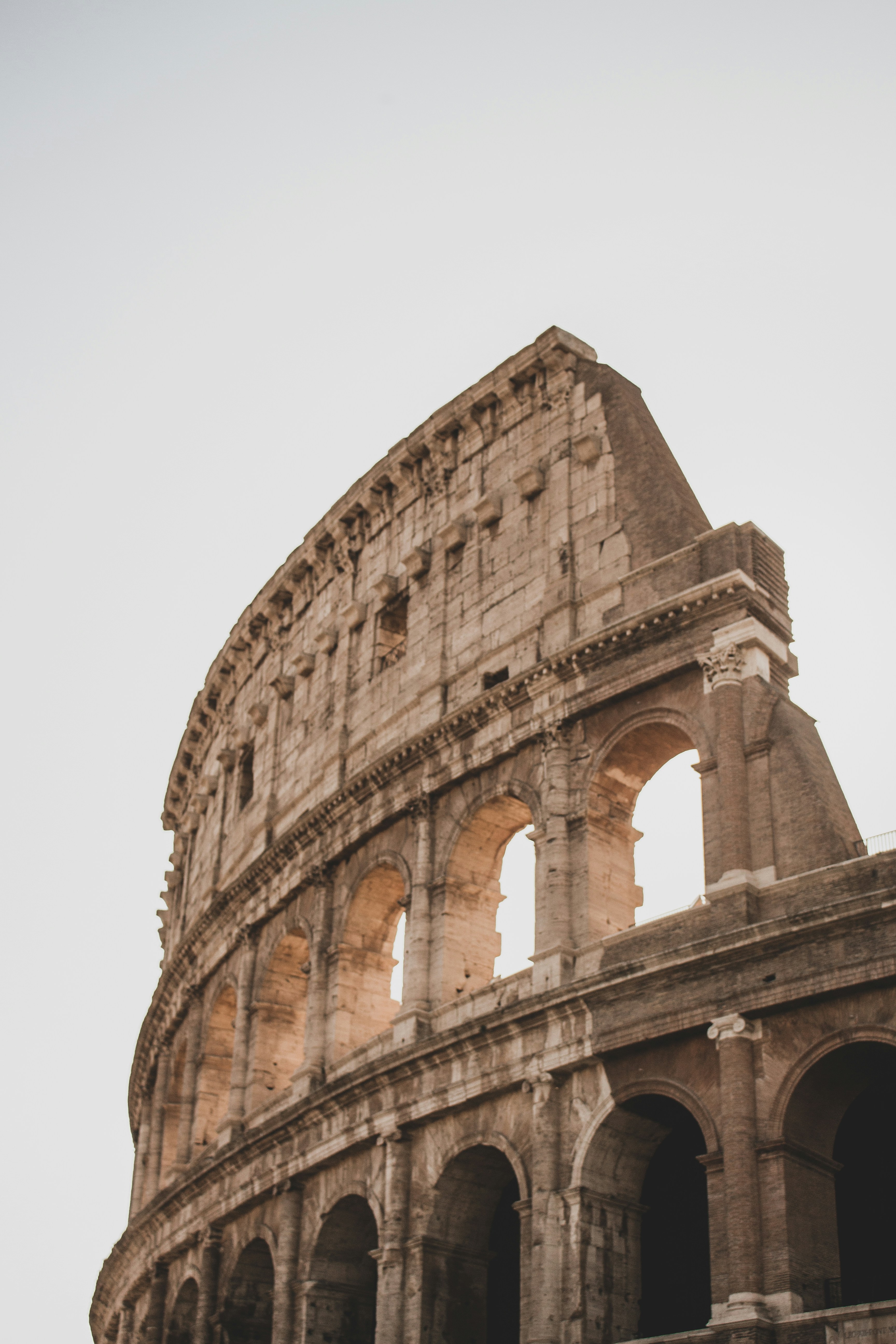
History of the Colosseum
The Colosseum, a magnificent structure located in Rome, Italy, is one of the most iconic landmarks of ancient Rome. Its construction began in AD 72 under the rule of Emperor Vespasian, who aimed to create a grand arena that would symbolize the power and ingenuity of the Roman Empire. This massive amphitheater, also referred to as the Flavian Amphitheatre, was completed and officially opened in AD 80, showcasing its grandeur with inaugural games that lasted for several weeks.
Throughout the years, the Colosseum served as a venue for a variety of public spectacles, including gladiatorial contests, animal hunts, and even mock naval battles, which captivated audiences across the empire. The grandeur of the events held within its walls not only entertained but also reinforced the social hierarchy of the time, illustrating the might of the rulers and the subservient role of the gladiators. The arena could accommodate approximately 50,000 spectators, all eager to experience the adrenaline of these often brutal contests.
As the centuries progressed, the Colosseum underwent various transformations, especially amid the decline of the Roman Empire. Natural disasters, such as earthquakes, caused significant damage to this iconic structure; portions of the outer wall collapsed and many of the materials were repurposed for the construction of new buildings throughout Rome. Despite this deterioration, the Colosseum has stood the test of time and remains an enduring symbol of ancient Roman civilization. Today, it continues to be a significant archaeological site, offering insight into the rich and tumultuous history of the world’s once-greatest empire.
Architecture and Design
The Colosseum, an enduring symbol of Rome, Italy, stands as a testament to the architectural and engineering prowess of ancient Rome. This monumental structure, also known as the Flavian Amphitheatre, features an elliptical shape, measuring approximately 189 meters long and 156 meters wide. The height of the Colosseum reaches around 48 meters, making it the largest amphitheater ever constructed in the Roman Empire.
One of the key elements of the Colosseum’s design is its tiered seating arrangement, which accommodated around 50,000 to 80,000 spectators. This layout ensured that nearly every attendee had an unobstructed view of the arena, where various spectacles, including gladiatorial contests and public spectacles, took place. The careful organization of seating was also indicative of the social hierarchy, as different sections were designated for different classes of society.
The Colosseum’s construction showcases innovative engineering techniques, particularly the extensive use of arches and vaults. These architectural features not only provided structural stability but also allowed for the efficient distribution of weight. The Romans employed a variety of materials, such as travertine limestone, tuff, and brick, which contributed to the durability of this iconic landmark.
Furthermore, the Colosseum was designed with functionality in mind. It incorporated trapdoors and sophisticated stage machinery to enhance the theatricality of the performances. The arena featured a complex system of passageways and corridors, allowing for swift movement and the management of crowds during events. This thoughtful design enabled the Colosseum to serve as a grand stage for entertainment, ensuring that it remains an unforgettable part of Rome, Italy’s cultural heritage.
Visiting the Colosseum Today
Touring the Colosseum in Rome, Italy, offers visitors an unparalleled glimpse into the grandeur of the ancient Roman Empire. To maximize the experience, it is essential to plan your visit effectively. Tickets can be purchased online through the official Colosseum site or from authorized vendors to avoid queues. It is advisable to book in advance, especially during peak tourist seasons, as many prefer to visit this iconic landmark.
Guided tours are available, providing valuable insights into the history and significance of the Colosseum. These tours often include access to areas not typically open to the general public, such as the underground chambers and the arena floor. Audio guides are another option for self-paced exploration, allowing visitors to absorb the information at their convenience.
The best times to visit the Colosseum to avoid large crowds are early in the morning or later in the afternoon. Weekdays tend to be less crowded than weekends as well. Upon arrival, visitors should prepare for security checks, similar to those at airports. It is advisable to leave bags larger than a small backpack at either accommodations or use designated storage facilities in the vicinity.
Accessibility is a priority at the Colosseum; ramps and lifts are available to assist those with mobility issues, ensuring that everyone can enjoy this historical marvel. Once you have explored the Colosseum, consider visiting nearby attractions such as the Roman Forum and Palatine Hill. These sites complement the visit perfectly, providing further context on ancient Roman life. Together, they create a comprehensive experience that celebrates the rich tapestry of history interwoven within Rome, Italy.
Cultural Significance and Legacy
The Colosseum, an enduring symbol of Rome, Italy, possesses profound cultural significance that has evolved through centuries. Constructed in AD 70-80, this ancient amphitheater stands as a testament to the ingenuity of Roman engineering and the grandeur of its imperial history. Initially serving as a venue for gladiatorial contests and public spectacles, the Colosseum reflected the complexities of Roman society, where power dynamics and social hierarchies were vividly displayed. Its capacity to host thousands of spectators illustrates its importance as a center of public life in ancient Rome.
As a monumental artifact, the Colosseum has inspired countless works of art and literature over the years. Artists such as Giovanni Paolo Panini and others have depicted it in paintings that capture its majestic form, while writers have referenced the structure to convey themes of glory, decline, and resilience. Furthermore, its architectural magnificence continues to influence contemporary design and urban development.
In modern society, the Colosseum represents not only the historical heritage of Rome but also its enduring spirit of empowerment. As a UNESCO World Heritage site, it draws millions of visitors annually, serving as a reminder of the immense cultural contributions of ancient civilizations. Preservation efforts to maintain this iconic structure are vital, ensuring that future generations can appreciate its historical narrative and architectural beauty. These endeavors are crucial in advocating for cultural awareness and heritage conservation worldwide.
Overall, the Colosseum’s legacy is a multifaceted one, encompassing its role as a symbol of Rome, Italy, influential presence in global culture, and an exemplar of humanity’s capacity for creativity and endurance. Protecting this landmark ensures that it continues to inspire and educate people about the rich history it represents.