
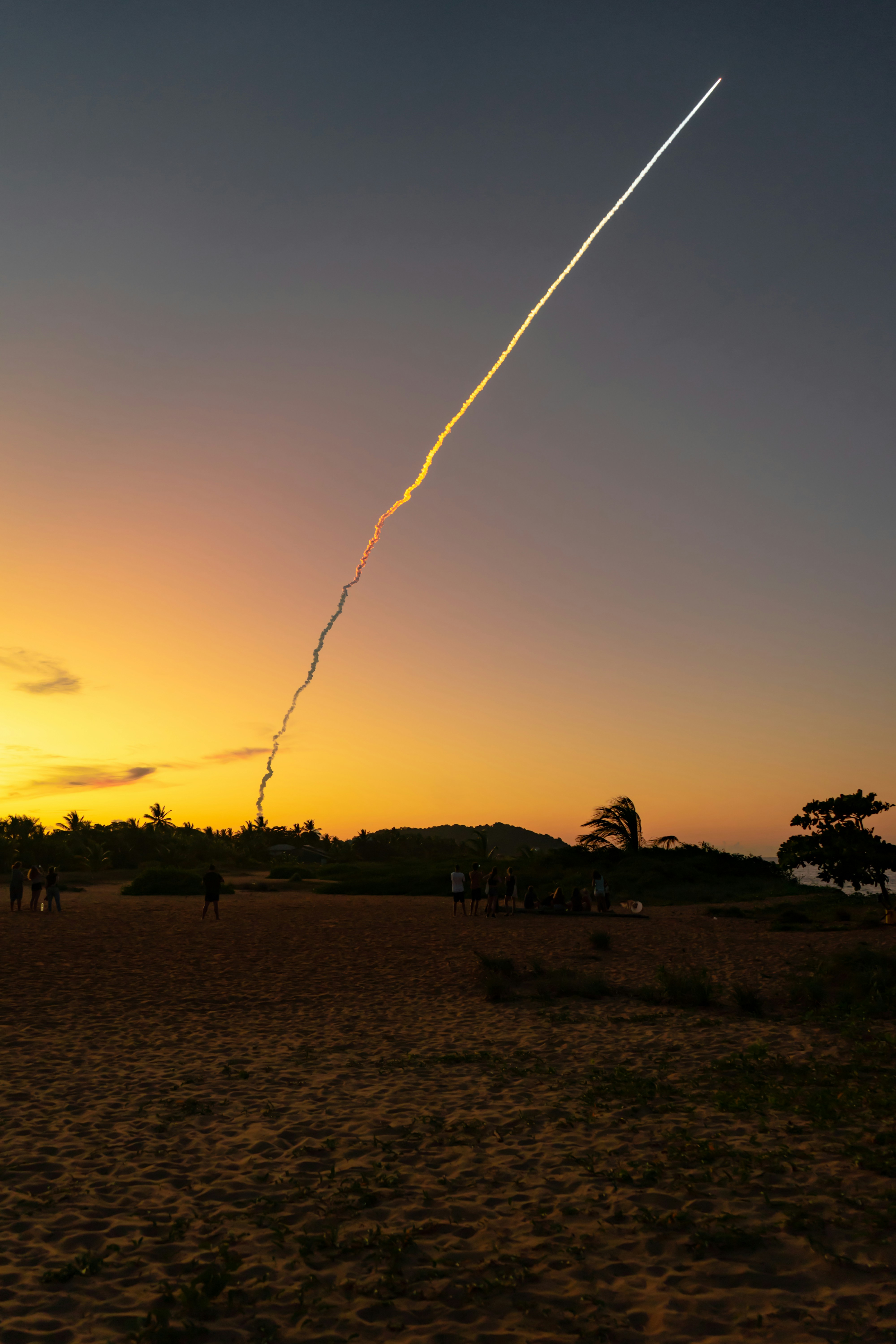
Introduction to Missiles
Missiles are advanced weapon systems capable of delivering explosive payloads with precision over considerable distances. They play a pivotal role in modern warfare, evolving as significant tools for both offensive and defensive operations. The primary purpose of missiles is to strike enemy targets effectively, thereby enhancing a nation’s combat effectiveness and strategic deterrence capabilities.
There are various types of missiles, with the two most notable classifications being cruise missiles and ballistic missiles. Cruise missiles are designed for low-altitude flight, usually powered by jet engines, and are capable of navigating through terrain to reach their intended targets autonomously. In contrast, ballistic missiles are launched into a high-arcing trajectory and travel through the atmosphere before descending towards their target, relying primarily on gravity in their later flight phases.
The significance of missile technology has surged in contemporary international security frameworks. With the proliferation of missile systems among various nations, the balance of military power is continually shifting. Countries invest heavily in developing or acquiring superior missile capabilities to ensure their deterrence posture and strategic advantage. Moreover, missile defense systems have also gained traction, as countries seek to protect their assets against incoming threats. This dynamic contributes to ongoing strategic dialogues and security measures among global powers.
In essence, understanding the distinctive roles and functions of different missile types is crucial for grasping the complexities of international military strategies. As missile technology progresses, its implications for global security will become increasingly important in diplomatic discussions aimed at mitigating potential conflicts and fostering stability in volatile regions.
What is a Cruise Missile?
Cruise missiles are precision-guided munitions that are designed to deliver a payload to a specific target with a high degree of accuracy over considerable distances. Unlike traditional ballistic missiles that follow a predictable, arched trajectory, cruise missiles travel at a relatively low altitude and can maneuver during flight to avoid radar detection and interception. This ability makes them an important asset in modern warfare, allowing forces to engage targets with minimal collateral damage.
One of the defining characteristics of cruise missiles is their sophisticated guidance systems, which often include GPS, inertial navigation, and terrain recognition technologies. These systems enable the missile to navigate complex geographical landscapes and accurately strike designated targets, such as enemy installations or tactical infrastructure. For example, the U.S. Navy’s Tomahawk missile is renowned for its precision and has been used extensively in military operations across the globe.
The operational use of cruise missiles has evolved significantly over the years, with variations tailored for different combat scenarios. Some cruise missiles, like the AGM-86 ALUM, are launched from strategic bombers, while others, such as the Navy’s Maritime Strike Tomahawk, can be launched from surface ships and submarines. This versatility allows armed forces to deploy cruise missiles in various operational contexts, from long-range strikes against high-value targets to close air support missions.
In summary, cruise missiles represent a critical technological advancement in military capabilities, combining speed, precision, and adaptability, which enhance their effectiveness in contemporary warfare. With ongoing innovations in missile technology, we can expect further advancements in cruise missiles, potentially expanding their roles in future conflicts.
Understanding Ballistic Missiles
Ballistic missiles are a type of missile that follow a ballistic trajectory to deliver one or more warheads to a predetermined target. Characterized by their high-arching flight paths, these missiles primarily operate in three distinct phases: launch, mid-course, and descent. During the launch phase, a ballistic missile is propelled by its rocket engines, which provide the thrust necessary to escape the earth’s atmosphere and initiate the missile’s trajectory. Once the engines shut down, the missile enters the mid-course phase, where it coasts through space and follows a predictable path due to gravitational forces.
The descent phase occurs when the missile re-enters the Earth’s atmosphere and begins its terminal approach to the designated target. This phase requires precise calculations to ensure accurate targeting, as atmospheric conditions can significantly influence the missile’s flight path. Ballistic missiles differ from cruise missiles, which utilize aerodynamic lift and can be guided during flight, whereas ballistic missiles are primarily governed by gravity and cannot be maneuvered once launched.
There are several categories of ballistic missiles, classified based on their range. Short-range ballistic missiles (SRBMs) typically have ranges of less than 1,000 kilometers, making them ideal for regional conflicts. Medium-range ballistic missiles (MRBMs) can travel between 1,000 to 3,500 kilometers, while intercontinental ballistic missiles (ICBMs) possess the capability to strike targets over distances exceeding 5,500 kilometers, potentially reaching continents across the globe.
Examples of notable ballistic missile systems include the American Minuteman III ICBM and the Russian R-36M. These systems showcase the technological advancements in missile engineering, enabling nations to enhance their strategic military capabilities. The dual-use nature of these missiles allows for both offensive capabilities and deterrence, underscoring their significance in contemporary military landscapes.
Comparative Analysis of Cruise and Ballistic Missiles
When examining the key differences and functions of cruise missiles and ballistic missiles, several dimensions must be considered. Firstly, the range of these two missile types varies significantly. Cruise missiles typically have a shorter range, often operating within a few hundred to over a thousand miles, allowing them to engage targets with precision at lower altitudes. Conversely, ballistic missiles can achieve ranges of several thousand miles, travelling through the upper atmosphere before descending onto their targets, which can be located much farther away.
Speed is another critical aspect where these missiles diverge. Cruise missiles generally travel at subsonic or supersonic speeds, making them relatively slower than ballistic missiles. Ballistic missiles, on the other hand, can reach hypersonic speeds, particularly during their terminal phase, allowing them to strike targets at remarkable velocities and presenting challenges for interception.
Regarding accuracy, cruise missiles are designed for high precision, utilizing guidance systems that can correct their course mid-flight, thereby reducing collateral damage. This capability makes them particularly effective for striking specific locations. In contrast, ballistic missiles, despite their longer range, are generally less precise, especially at extreme distances, where they rely more on their trajectory than on navigational corrections.
The payload capacity also differs between these two missile types. Cruise missiles can be equipped with various payloads, ranging from conventional explosives to special munitions, and are typically designed for tactical use. Ballistic missiles, particularly intercontinental ballistic missiles (ICBMs), are often designed to carry larger payloads, including nuclear warheads, aimed at strategic targets.
Finally, the intended use of cruise and ballistic missiles highlights distinct strategic implications. Cruise missiles are primarily used for tactical strikes and precision warfare in conventional conflicts, enhancing a nation’s ability to project power and respond rapidly. In comparison, ballistic missiles serve more strategic roles, often acting as deterrents due to their nuclear capabilities and long-range potential, thereby shaping global military power dynamics.